
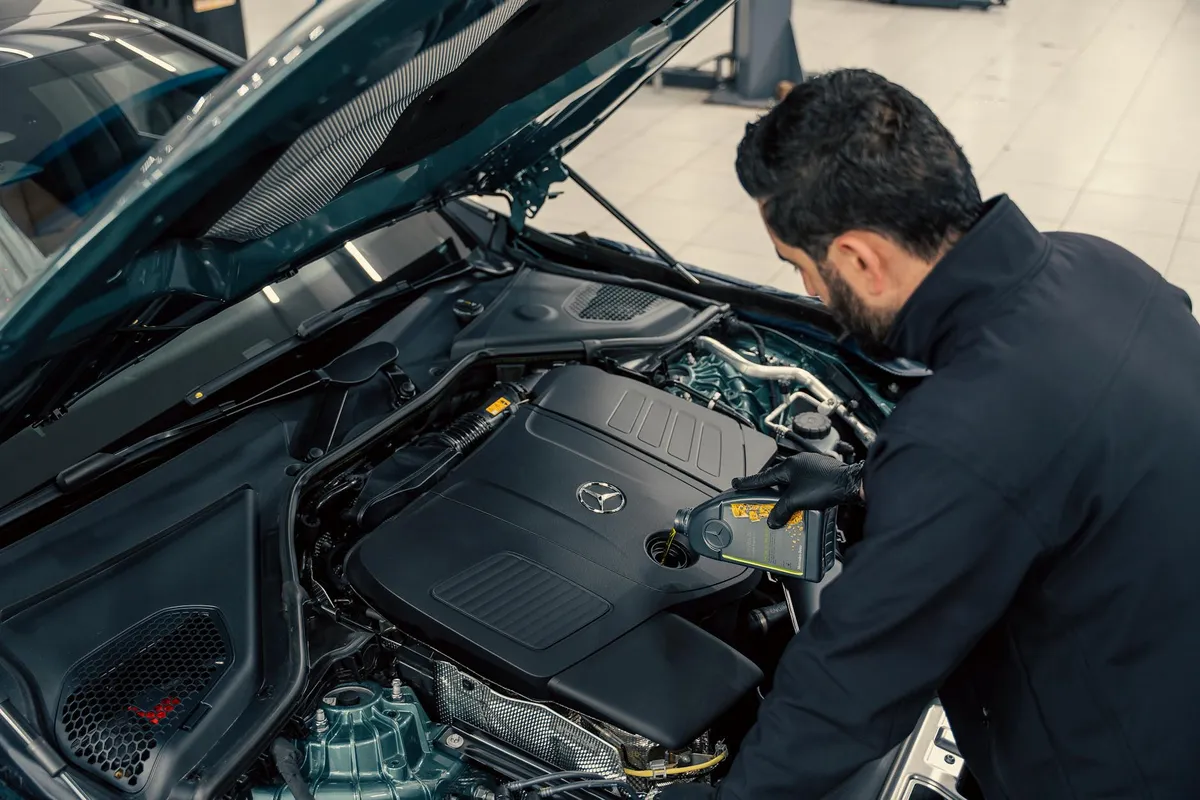
Used car maintenance is over-prescribed by some sources and under-prescribed by others. The dealer service department wants you to perform every maintenance item on the manufacturer's schedule (and add others for revenue); the cheapskate approach skips most of them and produces premature failures. The middle ground — the maintenance that actually extends life — is what produces the best long-term outcomes. Here are 7 tasks that consistently matter.
1. Engine oil and filter changes on schedule
The single most-important maintenance for engine longevity. Oil degrades over time and miles; the filter accumulates contaminants. Both need replacement on regular intervals.
How often: typically every 5,000-7,500 miles for conventional oil; 7,500-10,000 for synthetic. Manufacturer's schedule is the authority for any specific vehicle. Severe service (short trips, dust, towing) shortens intervals.
Why it matters: oil failure causes engine wear that compounds over time. Engines that get regular oil changes routinely run 200,000+ miles; engines that don't often fail much earlier.
What to use: appropriate viscosity per manufacturer specifications. Quality matters less than the change interval; reasonable mainstream oils work fine.
2. Transmission fluid changes (yes, even if "lifetime")
Many modern transmissions are marketed as having "lifetime" fluid that doesn't need changing. The reality: transmission fluid degrades with miles and heat, and "lifetime" sometimes means "the warranty period."
How often: every 60,000-100,000 miles for most transmissions. CVTs may need more frequent service. Manual transmissions every 60,000-80,000 miles.
Why it matters: transmission failures are among the most-expensive repairs. Fluid degradation contributes to transmission wear. Regular fluid changes extend transmission life substantially.
What to use: manufacturer-specified fluid (different transmissions need different fluids; using the wrong one causes problems).
3. Brake fluid changes
Brake fluid is hygroscopic — it absorbs water from the air over time. Water in brake fluid reduces braking effectiveness and can cause brake component failure.
How often: every 2-3 years regardless of mileage.
Why it matters: degraded brake fluid causes spongy brakes, reduced stopping power, and accelerated wear on brake system components (calipers, master cylinder). The fluid change is cheap; the consequences of skipping it are expensive.
What to use: manufacturer-specified DOT rating. Most vehicles use DOT 3 or DOT 4.
4. Coolant flushes
Engine coolant degrades over time and loses its protective properties. Old coolant is less effective at heat transfer and corrosion prevention.
How often: every 50,000-100,000 miles depending on coolant type. Long-life coolants (extended life) go longer; conventional coolants need more frequent service.
Why it matters: engine cooling system failures (head gaskets, water pumps, radiators) often have coolant degradation as a contributing factor. Regular flushes extend system component life.
What to use: manufacturer-specified coolant type and color. Mixing coolant types causes corrosion.
5. Spark plug replacement
Spark plugs wear over time and produce weaker spark as they age. Worn plugs reduce fuel economy, cause rough running, and stress ignition components.
How often: every 30,000 miles for copper plugs; every 60,000-100,000 miles for platinum or iridium plugs (most modern vehicles).
Why it matters: beyond the immediate effects on performance and economy, worn plugs cause stress on ignition coils that's expensive to repair.
What to use: manufacturer-specified plug type. Don't substitute; specific gap and heat range matter.
6. Tire rotation and alignment
Tires wear unevenly without rotation; alignment drift produces accelerated wear and handling issues.
How often: tire rotation every 5,000-7,500 miles (often combined with oil changes). Alignment check annually or after impact (curb strikes, potholes); adjustment if needed.
Why it matters: tires are expensive ($600-1,500+ for a set). Maximizing tire life through rotation and alignment significantly reduces ownership cost.
What to use: rotation pattern depends on tire type and drive type. Manufacturer's recommendation is the authority.
7. Battery testing and replacement when needed
Car batteries degrade over time and eventually fail. A failing battery causes starting problems and can damage other electrical components.
How often: test annually after 3 years of age. Replace when test results indicate end-of-life (typically 4-6 years for most batteries).
Why it matters: battery failure typically happens at the worst times (cold weather, far from home). Proactive replacement is cheaper than emergency replacement plus tow.
What to use: battery sized appropriately for the vehicle. Higher quality batteries last longer; the price difference is usually worth it.
The maintenance to skip (mostly)
Several maintenance items get recommended but produce limited return:
- Engine flushes. If you change oil regularly, the engine doesn't need flushing. Engines that haven't been maintained may benefit; well-maintained engines don't.
- Fuel system "cleaning" treatments. Marginal benefit for vehicles without specific fuel system issues. Use top-tier gasoline for ongoing fuel system health.
- Cabin air filter changes more than annually. Annual is enough for most users; more frequent doesn't produce proportionate benefit.
- Wheel alignment more than annually. Unless you've hit something significant, annual is adequate.
- Comprehensive "30,000-mile services" at dealers. Often include items not actually needed; verify each item against manufacturer schedule.
The DIY versus professional question
Some maintenance is reasonable to do yourself; some is better done professionally:
Reasonable DIY: oil changes (basic skill), cabin and engine air filters (very easy), wiper blades (very easy), bulb replacements (easy), tire pressure checks (essential).
Better professional: transmission service, brake fluid changes (requires bleeding), coolant flushes, alignment, brake work, anything involving suspension.
Always professional: any work involving safety systems (brakes, airbags), engine work beyond basics, transmission internal work.
The DIY work saves money on labor; the professional work is worth the labor cost for the safety and quality.
The maintenance plan that works
For most used car owners, the maintenance plan that produces best long-term results:
- Oil and filter changes per manufacturer schedule
- Tire rotation with each oil change
- Annual battery and brake fluid check
- Annual alignment check
- Annual cabin air filter change
- Transmission service per manufacturer schedule (or every 60-100k if "lifetime")
- Coolant flush per manufacturer schedule
- Spark plug replacement at recommended interval
- Address other items as inspection or symptoms indicate
This plan keeps most vehicles reliable through their useful life without unnecessary expense.
The cost of maintenance versus consequences of skipping
Annual maintenance for a typical used vehicle costs $500-1,500 depending on what's needed. That's the cost of keeping the vehicle reliable.
The consequences of skipping maintenance: premature engine failure ($3,000-7,000+), transmission failure ($3,000-7,000+), brake system damage ($1,000-3,000), other major issues.
The maintenance investment pays for itself many times over by preventing the major repairs that maintenance prevents.
The takeaway
Used car maintenance done well extends vehicle life substantially. The 7 tasks above cover the high-leverage maintenance; the additional items are mostly optional or unnecessary.
For your used car, develop a maintenance schedule based on these tasks and the manufacturer's recommendations. Track what gets done. The discipline produces years of additional reliable service from vehicles that would otherwise fail prematurely.